Introduction
India is in the middle of a quiet but profound health revolution. For decades, weight loss advice followed a familiar script eat less, move more, be patient. But in the last two years, a new class of weight loss drugs has fundamentally changed the conversation. Medications like semaglutide (Wegovy, Ozempic, Rybelsus) and tirzepatide (Mounjaro) are now available in India, and millions of people are asking the same urgent questions: Do they work? Are they safe? Can I afford them? And should I consider them?
This comprehensive guide answers all of those questions. Whether you are someone battling obesity, managing type 2 diabetes alongside excess weight, or simply trying to understand India’s rapidly growing weight loss drug market, this article gives you the full picture from how these drugs work, to their current prices, side effects, who qualifies, and what the future holds for affordable access in 2026.
What Are Weight Loss Drugs? Understanding the Basics
Weight loss drugs — also called anti-obesity medications — are prescription medicines that help people reduce body weight by acting on hormones, appetite signals, or fat absorption.
They are not diet pills or supplements. They are clinically studied, prescription-only treatments approved by India’s Central Drugs Standard Control Organisation (CDSCO) for specific medical conditions.
The most talked-about weight loss drugs in India today belong to a class called GLP-1 receptor agonists.
These drugs work by mimicking a natural hormone your gut releases after eating. That hormone travels to your brain and sends a clear signal: you are full. It also slows the rate at which your stomach empties food, meaning you feel satisfied longer after smaller meals.
The result is a significant and sustained reduction in calorie intake not through willpower, but through biology. This is why these drugs work differently from older weight loss medicines, which often relied on stimulants or fat-blocking mechanisms with unpredictable results.
The two dominant GLP-1 drugs now available in India are:
Semaglutide — sold as Wegovy (injectable, for weight loss), Ozempic (injectable, for diabetes), and Rybelsus (oral tablet, for diabetes). Manufactured by Danish pharma giant Novo Nordisk.
Tirzepatide — sold as Mounjaro, manufactured by American company Eli Lilly. Tirzepatide is a dual agonist, meaning it activates both GLP-1 and GIP (another gut hormone), making it especially potent for both blood sugar control and weight reduction.
Both are administered as once-weekly injections, making them far more convenient than daily pills.
Why Weight Loss Drugs Are Booming in India Right Now
India’s obesity crisis — key facts:
-
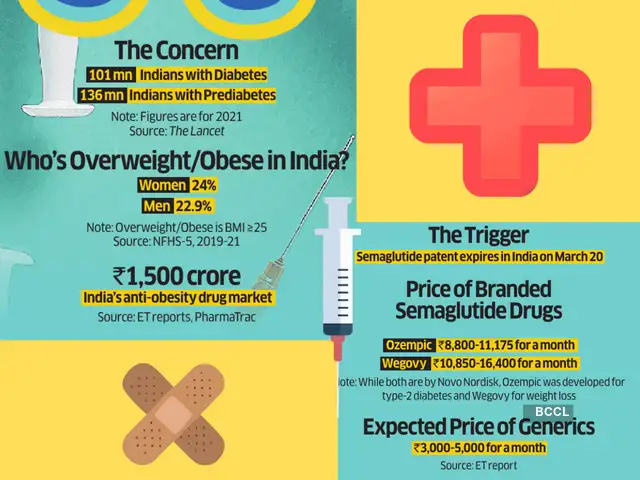
About 24% of women and 23% of men in India are overweight or obese, according to the NFHS-5 survey.
Source: https://pubmed.ncbi.nlm.nih.gov/39046947/ -
India’s anti-obesity drug market grew from ₹133 crore in 2021 to ₹628 crore by mid-2025, nearly 5× growth.
Source: https://www.moneycontrol.com/news/india/india-s-anti-obesity-drug-market-grows-fivefold-in-five-years-led-by-glp-1-therapies-13239100.html -
India has 77 million adults with type-2 diabetes, making it the world’s diabetes capital.
Source: https://www.sciencedaily.com/releases/2023/06/230622122642.htm -
The weight-loss services market in India is projected to reach $800 million by 2027.
Source: https://www.massgeneralbrigham.org/en/about/newsroom/articles/weight-loss-drug-demand-global-trends
The arrival of these drugs also reflects a deeper shift in how Indian medicine is beginning to treat obesity — recognising it as a chronic, progressive disease rather than a personal failure, involving complex interactions between genetics, hormones, metabolism, and environment.
How GLP-1 Weight Loss Drugs Work: The Science Explained Simply
Understanding how these drugs work helps explain why they are so different from everything that came before.
When you eat a meal, your small intestine releases GLP-1 hormone naturally. This hormone does several important things at once: it signals your brain that you are full, it stimulates insulin secretion to manage blood sugar, and it slows digestion so your stomach empties more gradually. In people with obesity, this system often becomes dysregulated, the hunger and fullness signals get muted or misread.
Semaglutide is a synthetic version of GLP-1 that stays active in the body far longer than the natural hormone. When injected weekly, it keeps the brain in a near-constant state of receiving “fullness” signals. People on semaglutide consistently report that their cravings drop dramatically, portion sizes naturally shrink, and emotional or habitual eating becomes easier to resist.
Tirzepatide goes one step further. It mimics both GIP and GLP-1 — two important hormones that regulate blood sugar and insulin production. This dual mechanism gives tirzepatide a slight edge in weight loss efficacy. Studies have shown weight loss of between 13–20% over 12–18 months with semaglutide and tirzepatide. To put that in perspective, a person weighing 90 kg could expect to lose 12–18 kg over about a year, results that were previously only achievable through bariatric surgery.
Weight Loss Drugs Available in India: A Breakdown
Here is a clear breakdown of the key medications now available or recently launched in India:
Semaglutide — Wegovy (Injectable) Wegovy is semaglutide specifically approved for chronic weight management. It is delivered through a pre-filled pen following a four-week titration cycle, starting at 0.25 mg/week and gradually increasing to up to 2.4 mg/week, with regular clinical monitoring.
Semaglutide — Ozempic (Injectable for Diabetes) Ozempic was officially launched in India by Novo Nordisk on December 12, 2025, starting at ₹8,800 per month for the 0.25 mg dose. It is approved for type 2 diabetes management but widely used off-label for weight loss under medical supervision.
Semaglutide — Rybelsus (Oral Tablet) Rybelsus is the oral version of semaglutide and currently commands a 69% market share among semaglutide products in India.
Tirzepatide — Mounjaro (Injectable) Eli Lilly launched Mounjaro in India in 2025 after receiving regulatory approval, originally developed for type 2 diabetes but widely recognised for producing significant weight loss. Mounjaro became India’s top-selling drug by value in October 2025.
How Much Do Weight Loss Drugs Cost in India?
Cost is one of the most searched questions around weight loss drugs in India, and for good reason — these medications can represent a significant monthly expense.
Semaglutide (Rybelsus or Wegovy) currently costs approximately ₹10,000 to ₹17,000 per month. Tirzepatide (Mounjaro) falls within a similar price range depending on dosage and supplier.
Ozempic, the newest launch, starts from ₹8,800 per month for the 0.25 mg dose, making it currently the most affordable branded semaglutide option in India.
However, a major shift is coming. Semaglutide’s patent is set to expire in March 2026, and analysts predict a price war that could drive costs down by as much as 90% in India. At least 10 Indian pharma firms including Dr. Reddy’s Laboratories and Cipla have already started processes to manufacture semaglutide. These generic versions could bring monthly costs down to ₹3,000–₹5,000, transforming access for middle-class Indian patients.
It is also worth noting that Indian health insurance plans currently do not cover weight loss medications or obesity treatments like Ozempic, meaning all costs are out of pocket.
Who Qualifies for Weight Loss Drugs in India?
Weight loss drugs are not for everyone who wants to lose a few kilograms. They are prescription medications designed for people with medically significant obesity or related conditions.
Importantly, these drugs are not recommended for cosmetic purposes or for people who do not meet medical criteria, as unnecessary use exposes patients to avoidable risks and side effects. Only a certified physician should prescribe and supervise treatment.
Side Effects: What You Need to Know Before Starting
No medication is without side effects, and weight loss drugs are no exception. Knowing what to expect helps patients prepare and reduces unnecessary alarm.
One important consideration specific to India: availability of these drugs without prescriptions or medical consultation at pharmacies and online platforms needs urgent curbing, according to medical professionals. Self-medicating with GLP-1 drugs without proper evaluation and monitoring is dangerous, and counterfeit or illegally sourced products carry serious health risks.
Common Misconceptions About Weight Loss Drugs in India
“These are just Bollywood slimming pills.” GLP-1 drugs are not cosmetic shortcuts. They are rigorously studied pharmaceutical compounds that have undergone large-scale clinical trials. They are prescribed for serious metabolic disease — not aesthetics.
“You can stop once you’ve lost the weight.” This is one of the most important misconceptions to address. Most users regain weight after stopping tirzepatide unless they follow a healthy diet and exercise plan.
“Ozempic and Wegovy are the same thing.” They contain the same active ingredient (semaglutide) but are different products. Wegovy is specifically formulated and approved for weight loss at higher doses (up to 2.4 mg). Ozempic is approved for diabetes at lower doses (up to 1 mg) but is widely used off-label for weight management.
“These drugs work without lifestyle changes.” Every specialist interviewed on this topic is consistent: these medicines work better only when combined with lifestyle changes.
Best Practices: How to Start Weight Loss Medication Safely in India
If you and your doctor have decided that a GLP-1 medication is appropriate for you, here is how a responsible treatment journey typically looks:
Step 1 Consult the right specialist. Seek out an endocrinologist, obesity medicine physician, or internal medicine doctor with experience in metabolic health. Avoid general practitioners who are unfamiliar with these medications or clinics that offer them without proper assessment.
Step 2 Get a complete health assessment. This includes blood tests, body composition analysis, BMI calculation, and a review of your full medical history — especially any history of pancreatitis, thyroid conditions, kidney disease, or psychiatric illness.
Step 3 Start on the lowest effective dose. Both semaglutide and tirzepatide use a gradual titration schedule, beginning at very low doses to minimise side effects. Never skip this step or self-escalate your dose.
Step 4 Combine medication with nutrition and movement. Work with a dietitian to optimise protein intake (critical for preserving muscle mass), and establish a sustainable physical activity routine. Staying hydrated and maintaining fibre intake also helps reduce constipation risk.
Step 5 Attend regular follow-ups. Monitoring appointments every 4–8 weeks allow your doctor to assess effectiveness, adjust doses, and catch any early warning signs of side effects.
Step 6 Buy only from authorised sources. Obtain medication only through major pharmacy chains. Avoid unverified online sellers — counterfeits are common and dangerous.
Weight Loss Drugs in India: 2026 Outlook and What’s Coming
The next 12 months represent a turning point for weight loss medicine in India.
The single biggest development is the expiry of semaglutide’s patent in March 2026. Analysts predict India could become a key low-cost global supplier of semaglutide generics, just as it did with HIV drugs decades ago. This could trigger a price war that finally brings these medicines within reach of India’s vast middle class.
With patent expiry for semaglutide approaching 2026, a number of generic versions have already entered the market, and anticipating this, innovator brands themselves reduced prices significantly.
The broader challenge, as experts consistently note, is ensuring that the conversation remains rooted in health equity and ethical medicine — that these transformative drugs reach people who need them medically, rather than becoming a luxury product for those seeking cosmetic weight loss, deepening healthcare inequality.
Frequently Asked Questions (FAQ)
Is Ozempic available in India? Yes. Ozempic was officially launched in India on December 12, 2025 by Novo Nordisk and is available at major pharmacies with a prescription. It is approved for type 2 diabetes management and may be used for weight loss under a doctor’s supervision.
What is the cheapest weight loss injection available in India? Ozempic currently offers the lowest price point among branded semaglutide products, starting at ₹8,800 per month. Generic semaglutide options are expected from March 2026 onward at significantly lower prices.
Can I buy weight loss drugs without a prescription in India? No — and you should not try. All GLP-1 drugs are prescription-only medications. Using them without medical evaluation and ongoing supervision can lead to serious side effects and health risks.
How much weight can I realistically lose with semaglutide or tirzepatide? Clinical studies show weight loss of 13–20% over 12–18 months with semaglutide and tirzepatide, when combined with dietary and lifestyle changes. Individual results vary based on starting weight, dose, adherence, and lifestyle factors.
Will I regain weight if I stop taking these drugs? Most people do regain a significant portion of lost weight after stopping GLP-1 medications if they do not maintain dietary discipline and physical activity. These drugs are typically intended for long-term use in people with chronic obesity.
Are generic weight loss drugs coming to India? Yes and soon. After semaglutide’s patent expires in March 2026, Indian pharmaceutical companies are expected to launch generic versions at 50–85% lower prices, potentially as low as ₹3,000–₹5,000 per month.
Conclusion
Weight loss drugs have arrived in India at a pivotal moment. With one in four adults now overweight or obese, and the country carrying the world’s largest diabetes burden, the need for effective, medically supported obesity treatment has never been greater. GLP-1 medications like semaglutide and tirzepatide represent a genuine scientific breakthrough — offering levels of sustained weight loss that were previously unimaginable without surgery.
But they are not magic. They work best as part of a comprehensive approach combining medical supervision, nutritional support, and lifestyle change. They carry real side effects that require monitoring. They are currently expensive — though that is about to change dramatically as generics arrive in 2026. And they are not for everyone.
If you are considering a weight loss drug in India, the right first step is not an internet search or a pharmacy visit — it is a conversation with a qualified doctor who can properly assess your health, your needs, and your options. India’s obesity crisis deserves better than shortcuts. It deserves informed, ethical, and accessible medicine.
Disclaimer:
This content is for informational purposes only and does not constitute medical advice. Always consult a qualified physician, endocrinologist, or obesity medicine specialist before starting any weight loss medication.